FROM THE AI FRONTIER
AI skills begin with a clear work instruction
A specialist can describe a useful skill of AI without programming. Discuss the Range experience: how to choose a small task, show a good result and leave the test to the person.
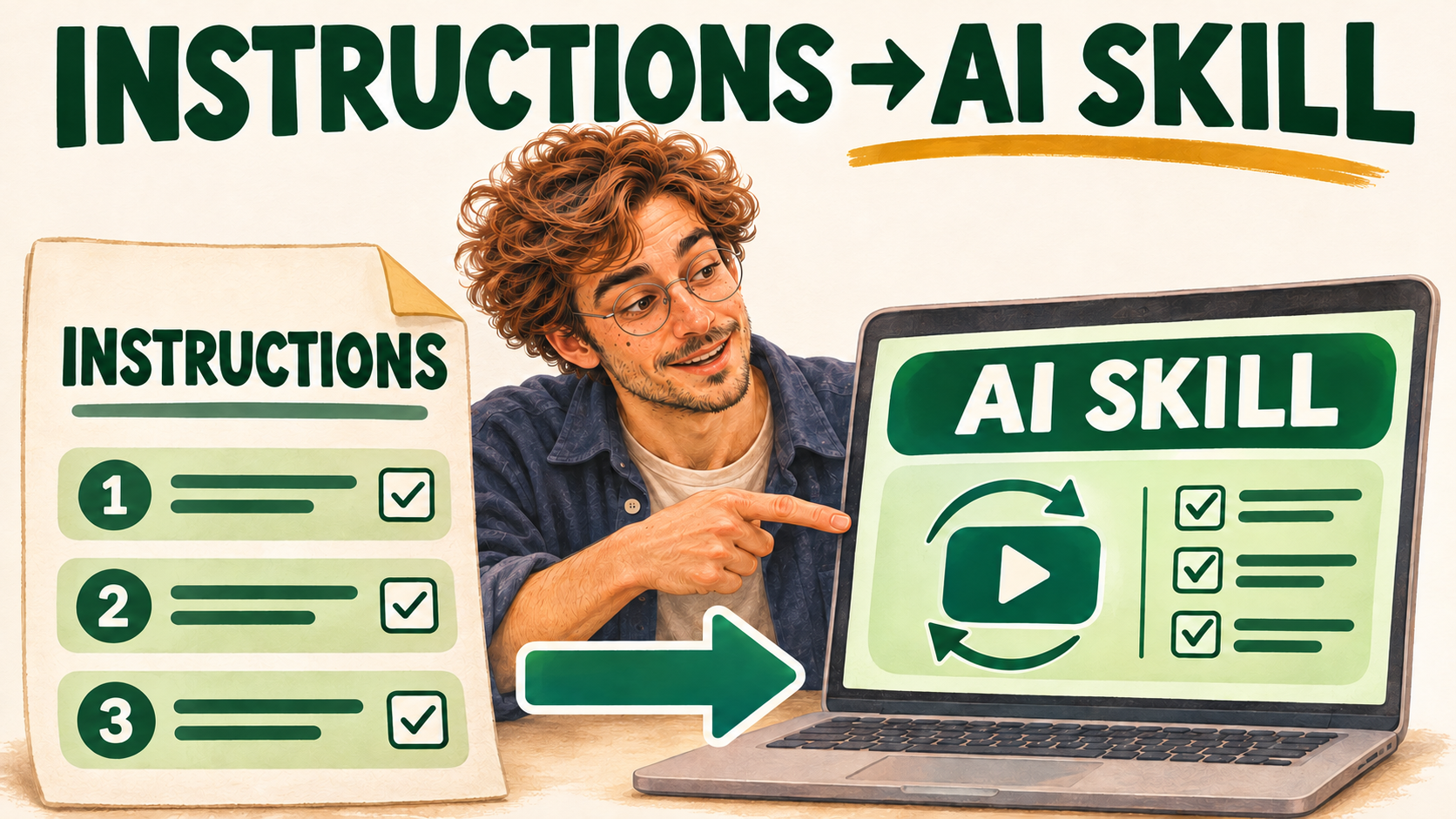
Instead of the task of “automating the entire department,” start with one procedure that you know how to evaluate. Describe the input, good result and times when you need your help. This is our practical takeaway from Matt Ragone from Range.
What's the video
Ragone describes how Range’s finance professionals, with no programming experience, built skills for everyday work. It offers five stages: select a task, teach on examples, draw up a skill, test and transfer to work. In 6:11–11:42, examples of corrections, verification of atypical cases and appointment of a responsible person are particularly important. Sending the result to the client is up to the person.
It's a description of one team's experience. It does not imply that any integration can be built without a developer.
What you can try for yourself
Let’s take a conditional task: analyze guest reviews for a week. To begin with, an impersonal collection, one sample of a good report and a short instruction is enough. Connecting to real systems can be discussed later.
Check the instructions on several different collections. Add a sarcasmic review, a repeat of one message, and text without a specific claim. See where the report loses meaning or counts one event twice.
Turn every error you find into a clear rule. For example: “Similar messages are considered one review and separately indicate the number of repetitions.” Then repeat the check on another collection.
Where to start today
Choose one repetitive task. Write it down:
- What the assistant gets at the entrance.
- What an acceptable outcome looks like.
- At what uncertainty he must stop.
- Check the results and update the instructions.
For my first attempt, I would choose a draft of the internal report. So you can safely see the weak points of the instruction before instructing the assistant to take the next step.
The video was published on the AI Engineer channel on November 8, 2026. The analysis was prepared on November 10 by available decryption.